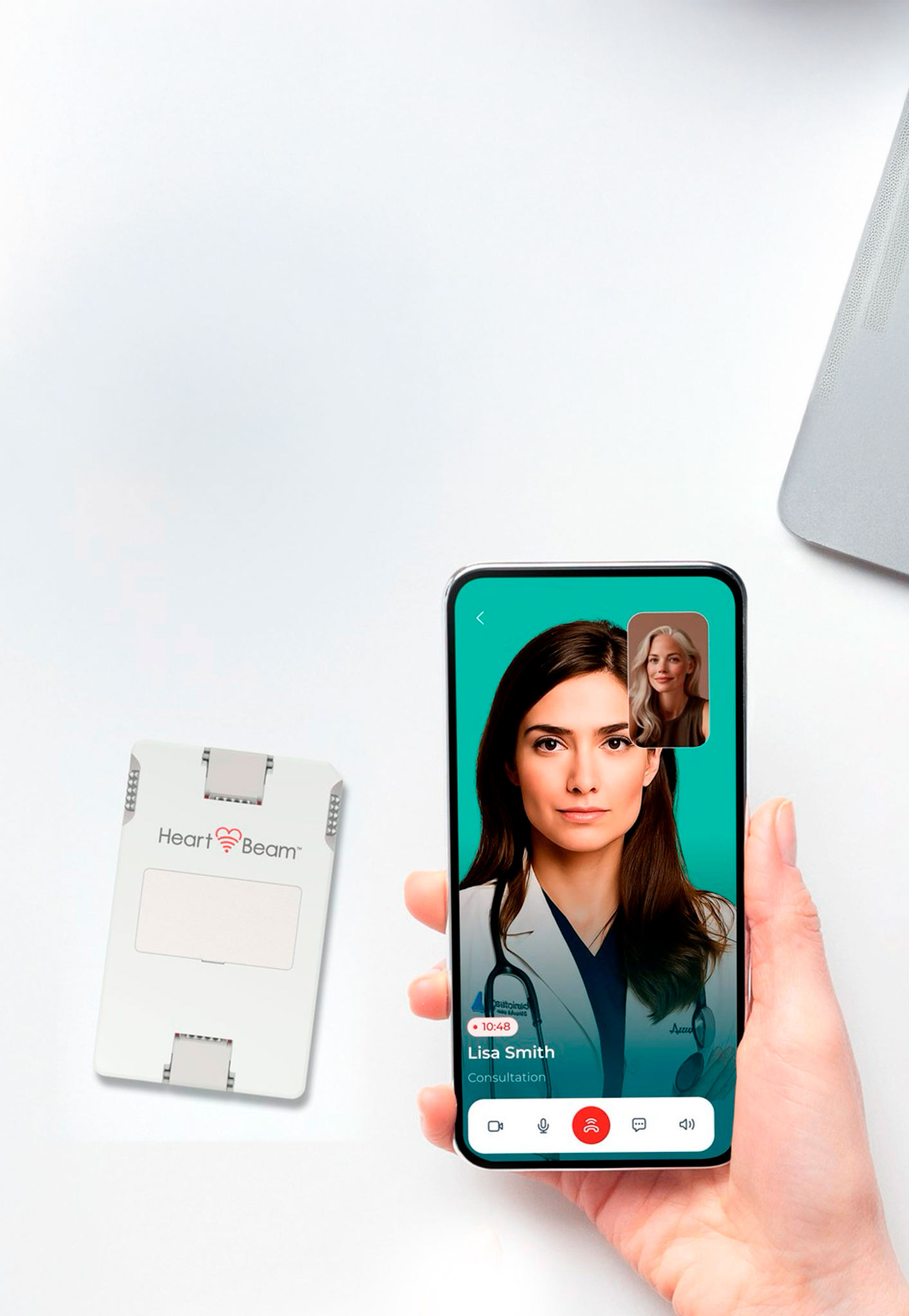
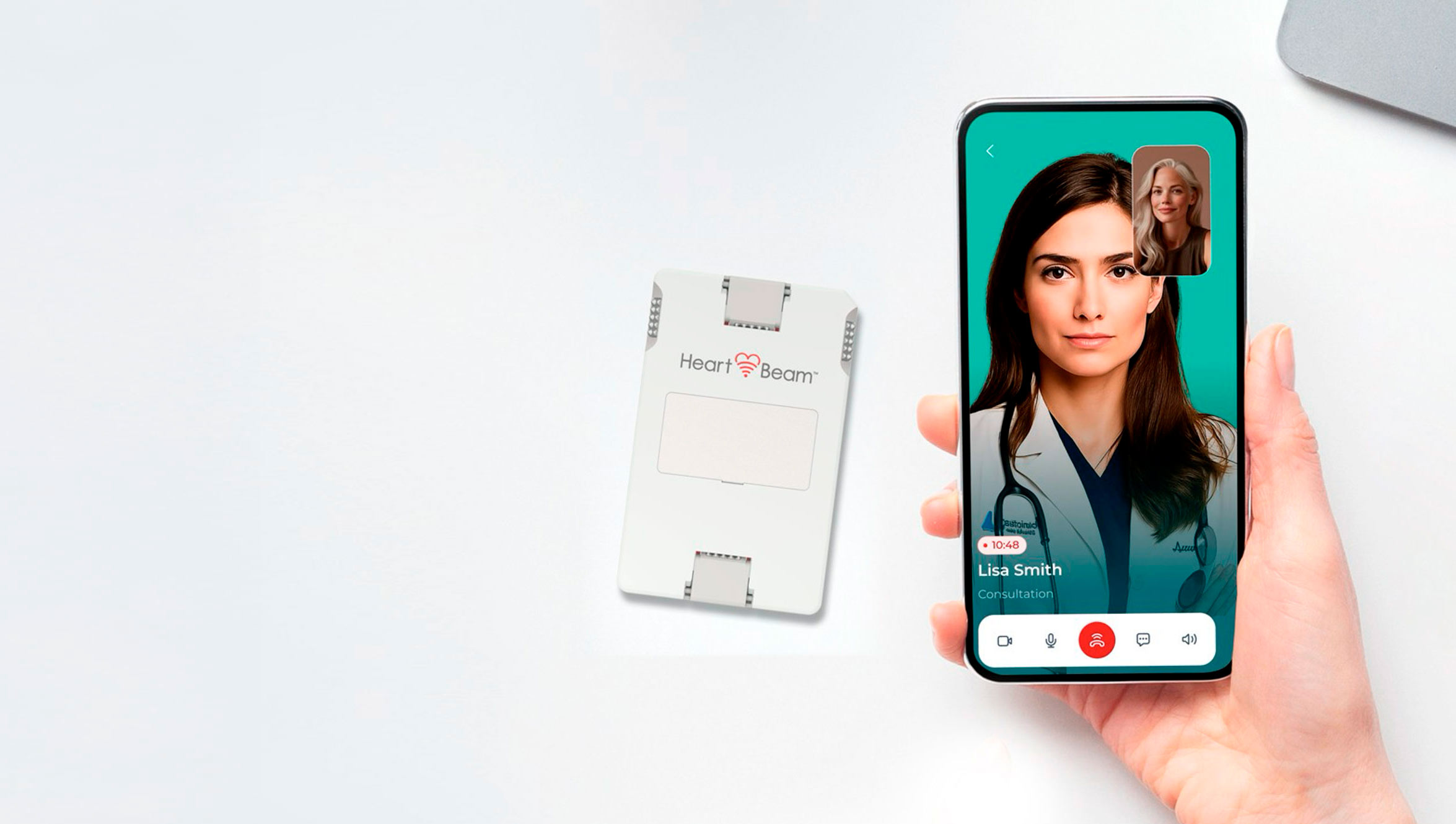
Cut the Cords
12-lead ECG is the diagnostic standard and provides a comprehensive assessment of the heart's electrical activity but today's options are lacking.

Traditional 12-lead ECGs require a health care professional for application and are not practical for at-home use

Multiple at-home monitoring options available but do not offer 12-lead ECG and are limited in the heart conditions they can detect
Let's compare
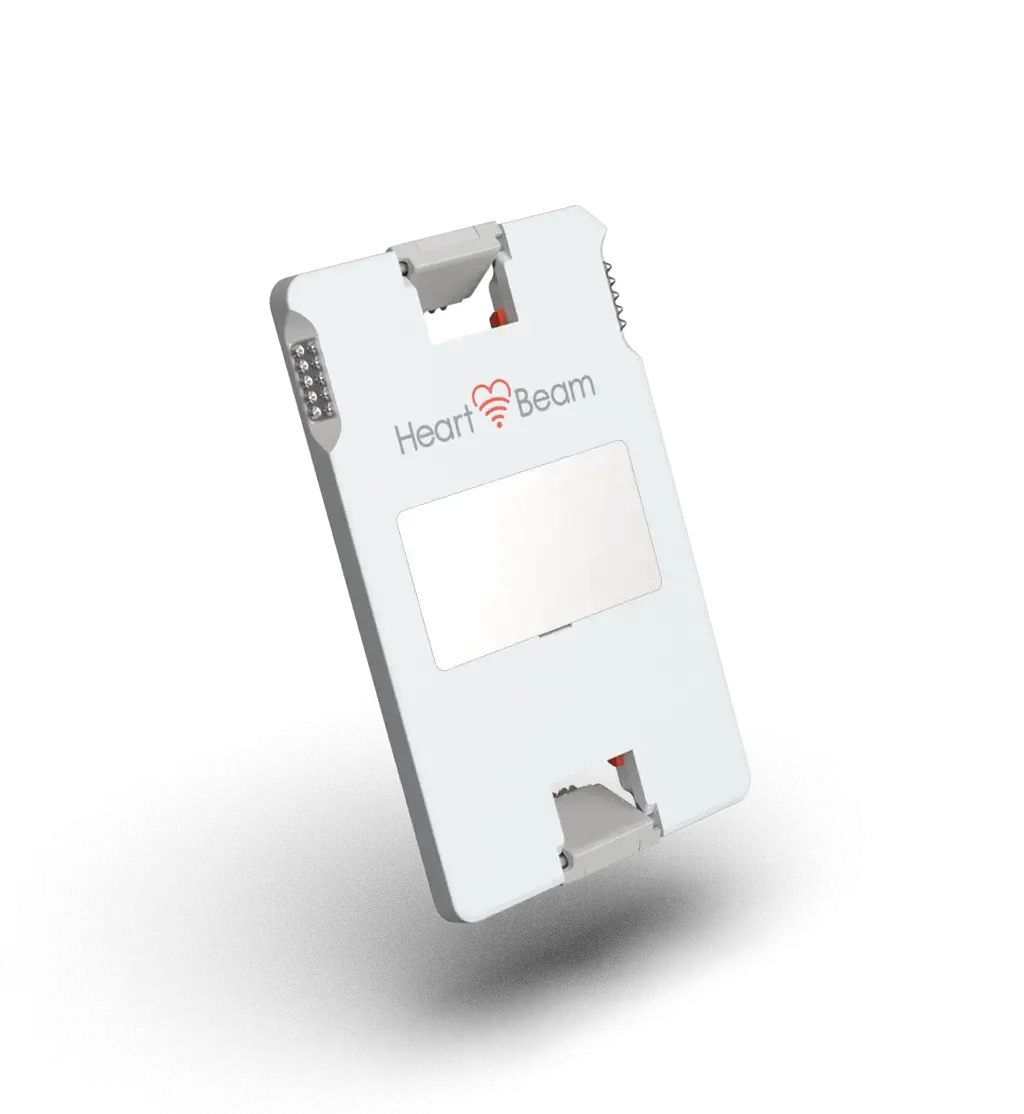
HeartBeam System
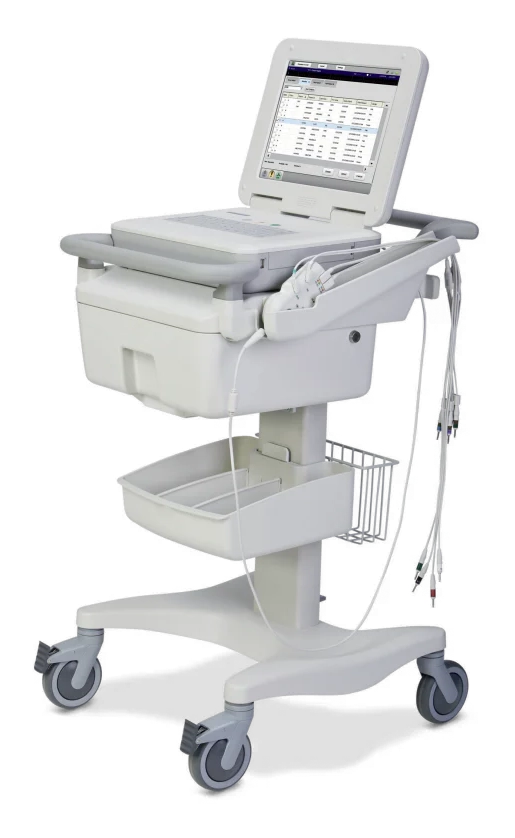
Traditional 12-Lead ECG
Functionality
A compact, handheld device with no wires or sticky pads; simply hold it against your chest with two fingers
A stationary machine is connected via cables to 10 sticky pads (electrodes) placed on your chest, arms and legs
Convenience
Fits in your pocket, allowing you to take readings at any time, especially when you are experiencing symptoms; send results to your doctor 24/7
Requires traveling to medical facilities, scheduling appointments, and trained technicians to operate the machine
The HeartBeam Solution
The only cable-free, credit card-sized device that captures the heart’s signals from three dimensions and synthesizes a 12-lead ECG. Here's how it works:

Patient app provides step-by-step guidance
The HeartBeam app offers a simple user interface to guide the patient through the signal recording process.


Patient captures recording
The patient places the small device on their chest for a 30-second signal recording.

Recording sent to HeartBeam cloud
The signals are sent to the cloud and synthesized into a 12-lead ECG, then sent to the on-call cardiologist for review.

On-call cardiologist reviews recording and follows up with patient
The on-call cardiologist, available 24/7, reviews the synthesized 12-lead ECG and follows up with the patient to triage and recommend next steps.